
Nothing ruins the start of a fishing trip faster than realizing you forgot your license. In Georgia, fishing for trout without the right credentials isn’t just an oversight — it’s a fineable offense, and game wardens do check, especially on popular waters like the Toccoa River near Blue Ridge. The good news is that getting properly licensed takes about five minutes online and costs less than a decent fly box.
This guide covers everything you need to know: who is required to have a license, exactly what to buy, how much it costs, where to get it, and what waters around Blue Ridge require what. No guesswork, no surprises on the riverbank.
Do You Need a Fishing License in Georgia?
In most cases, yes. Georgia requires anyone fishing in public waters to hold a valid fishing license. For trout specifically, a standard fishing license alone is not enough — you also need a Georgia Trout License (commonly called a trout stamp), which is an add-on endorsement to your base fishing license.
Here is who is exempt from needing a Georgia fishing license:
- Georgia residents who are under 16 years old
- Georgia residents who are 65 years of age or older (resident license free; trout stamp still required on some waters)
- Anyone fishing on a licensed fee fishing area (a private pay-to-fish pond that holds its own license)
- Residents fishing during Georgia’s free fishing days (typically one weekend in June each year — check the DNR website for current dates)
If you are a non-resident visiting Blue Ridge from out of state, you are not exempt regardless of age (unless under 16). You need both a non-resident fishing license and the trout stamp.
Note: Always confirm exemption rules directly with the Georgia DNR Wildlife Resources Division, as rules can change between seasons.
What Licenses Do You Actually Need for Trout Fishing Near Blue Ridge?
To fish for trout legally on waters like the Toccoa River, Noontootla Creek, Cooper Creek, or Rock Creek near Blue Ridge, you need two things:
- A Georgia Fishing License (resident or non-resident)
- A Georgia Trout License (the trout stamp add-on)
Both must be valid for the dates of your trip. They are purchased together or separately through the same Georgia DNR licensing system. You do not need a separate federal stamp for freshwater trout fishing in Georgia — that requirement applies to saltwater migratory fish and waterfowl, not inland trout.
License Types and Current Costs
Georgia offers several license types to fit different situations. Below are the most relevant options for a trout fishing trip to the Blue Ridge area. Prices are subject to change — always verify current fees at the Georgia DNR website before purchasing.
Resident Licenses (Georgia Residents)
- Annual Fishing License: Valid for one year from date of purchase. This is the best value if you fish more than once a year in Georgia.
- One-Day Fishing License: Valid for a single calendar day. A cost-effective option if you’re only fishing one day of a longer trip.
- Three-Day Fishing License: Valid for three consecutive days. A good choice for a long weekend fishing trip.
- Annual Trout License (Trout Stamp): Required in addition to your base fishing license to fish for trout. Valid for one year.
Non-Resident Licenses (Out-of-State Visitors)
- Annual Non-Resident Fishing License: Best value for visitors who plan to return to Georgia more than once in a year.
- 7-Day Non-Resident Fishing License: A popular option for visitors planning a week-long trip to Blue Ridge.
- One-Day Non-Resident Fishing License: Available for single-day trips.
- Annual Trout License (Trout Stamp): Same trout stamp required for non-residents as residents. There is no non-resident-specific trout stamp — it’s the same add-on for everyone.
For the most current pricing on all license types, visit georgiawildlife.com/licenses-permits-fees. Fees are set by the Georgia General Assembly and updated periodically.
How to Buy a Georgia Fishing License
You have three options for purchasing your Georgia fishing license and trout stamp:
Option 1: Online (Fastest and Recommended)
Visit the Georgia DNR Wildlife Resources Division website and purchase your license through their online licensing portal. You’ll receive a digital license immediately that you can save to your phone or print. This is the fastest option and works 24 hours a day, including the night before your trip.
Option 2: In Person at a Local License Agent
Several retailers near Blue Ridge sell Georgia fishing licenses in person. Sporting goods stores, bait shops, and some general retailers in Blue Ridge, Morganton, and McCaysville typically carry them. Call ahead to confirm before making the trip specifically for a license — not every small retailer stays current with their license agent registration.
Option 3: By Phone
You can purchase a license by calling the Georgia DNR licensing line during business hours. This option is slower than the online portal and rarely necessary, but it’s available if you have trouble with the website.
The bottom line: Buy online the night before your trip. It takes five minutes, you get your license instantly, and you don’t have to make an extra stop on the way to the water.
Do You Need to Carry a Physical License?
Georgia allows anglers to display a digital copy of their fishing license on a mobile device. A screenshot or the digital license saved in the Georgia DNR app is acceptable for law enforcement inspection. That said, if you’re fishing in an area with unreliable cell service — which applies to stretches of the Toccoa River and certainly to remote waters like Noontootla Creek — it’s worth printing a paper copy or downloading the digital version offline before you leave the lodge.
Special Regulations Waters Near Blue Ridge
Beyond the standard license and trout stamp, certain waters near Blue Ridge carry additional regulations worth knowing before you show up with the wrong gear.
Toccoa River Delayed-Harvest Section
The approximately two-mile delayed-harvest section below Blue Ridge Dam operates under special rules from November 1 through May 14: artificial lures only, single hooks only, and all trout must be released immediately. Your standard license and trout stamp are still required — the delayed-harvest designation adds restrictions on top of standard licensing requirements, not in place of them. Read our full Toccoa River fly fishing guide for a detailed breakdown of the section and what to expect throughout the year.
Noontootla Creek Trophy Trout Section
The trophy trout designation on Noontootla Creek requires artificial lures only, single hooks only, and complete catch and release — year-round, not seasonally. Again, your standard license and trout stamp are required on top of these special rules. Noontootla is one of the most carefully managed streams in Georgia, and enforcement is taken seriously. See our complete Noontootla Creek guide for full details on fishing this exceptional wild trout stream.
Chattahoochee National Forest Streams (Cooper Creek, Rock Creek, etc.)
Streams flowing through the Chattahoochee National Forest, including Cooper Creek and Rock Creek near Blue Ridge, are subject to standard Georgia trout regulations unless specifically designated otherwise. A valid fishing license and trout stamp cover you on these waters. Check the Georgia DNR Fishing Regulations guide for any stream-specific rules before fishing a new location.
Fishing License Rules for Kids
Georgia residents under 16 do not need a fishing license, including for trout. Non-resident children under 16 also do not need a license. This makes family fishing trips to Blue Ridge very accessible — kids can fish legally without any paperwork, though they still need to follow all other regulations including any special rules on designated trophy or delayed-harvest waters.
If you’re bringing younger kids to Blue Ridge for their first fishing experience, the stocked sections of the Toccoa River near Morganton and Rock Creek near Blue Ridge are the most beginner-friendly options. Wide banks, plenty of stocked fish, and manageable wading conditions make for a great introduction to trout fishing. Save the technical waters like Noontootla for when they’ve caught a few fish and are hooked on the sport.
One More Thing: Georgia Free Fishing Days
Once a year, Georgia DNR designates a Free Fishing Weekend — typically one weekend in early June — during which Georgia residents can fish without a license. Trout fishing is included. Non-residents are not covered by free fishing days and still need a valid license and trout stamp.
Free Fishing Weekend is a great opportunity to bring a first-timer to the Toccoa River without the barrier of purchasing a license. Dates are announced each year on the Georgia DNR website, usually in early spring.
Plan Your Blue Ridge Fishing Trip
Once your license is sorted, the only thing left to do is pick your water and show up. The Blue Ridge area offers more quality trout fishing than most anglers can cover in a week — from the world-class tailwater of the Toccoa River to the wild browns of Noontootla Creek to the mountain streams of Fannin County. For a full overview of every option in the area, see our guide to the best trout fishing spots near Blue Ridge, Georgia.
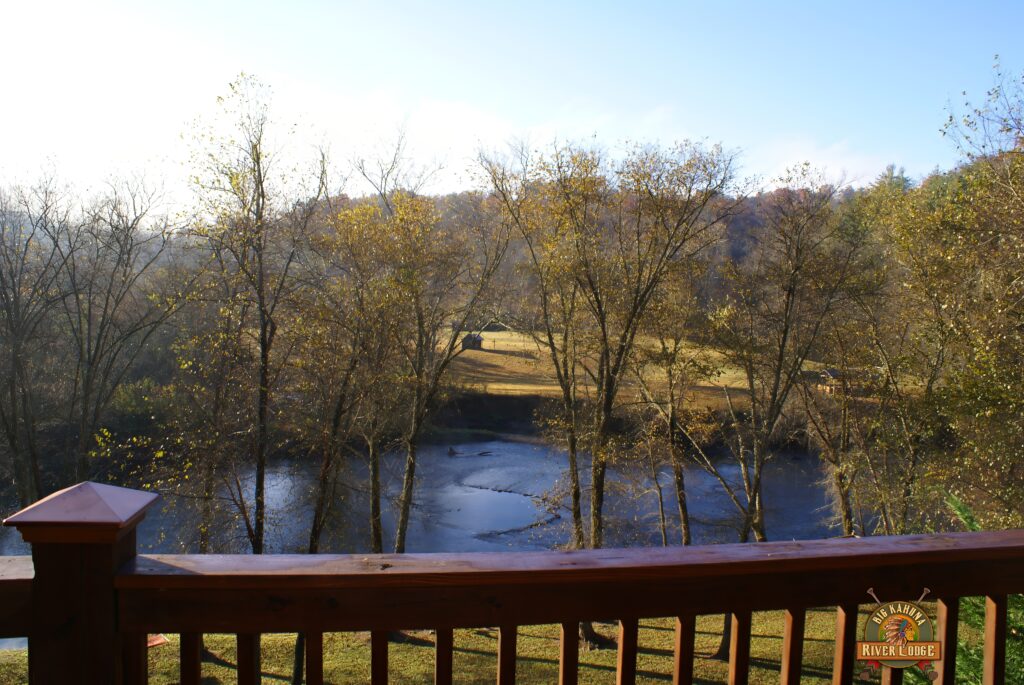
Big Kahuna River Lodge sits right on the Toccoa River near Mineral Bluff — 375 feet of private river frontage, and within easy striking distance of every major trout fishery in the area. It’s the kind of place where you can be in the water ten minutes after waking up. Check availability and book your stay here.
Frequently Asked Questions
Can I buy a Georgia fishing license at Walmart near Blue Ridge?
Some Walmart locations do sell Georgia fishing licenses through the Georgia DNR licensing system, but availability varies by store. The online portal at georgiawildlife.com is more reliable and faster — you’ll have your license in hand within minutes regardless of what time you purchase it.
Does my fishing license from another state work in Georgia?
No. Georgia does not currently have reciprocal fishing license agreements with other states. If you are a non-resident visiting from any other state, you need a Georgia non-resident fishing license and a Georgia trout stamp to legally fish for trout in Georgia waters.
How long is a Georgia fishing license valid?
Annual licenses are valid for one year from the date of purchase, not for a calendar year. So a license purchased in October is valid through the following October. Short-term licenses (one-day, three-day, seven-day) are valid for the number of consecutive days indicated, beginning on the date of purchase.
What happens if I get caught fishing without a license in Georgia?
Fishing without a valid license in Georgia is a misdemeanor offense. Fines vary but can be substantial, particularly on designated trophy or special-regulation waters. Game wardens actively patrol popular streams including the Toccoa River, and they do check licenses. It’s simply not worth the risk — a fishing license costs less than a decent meal in Blue Ridge.
Do I need a separate license to fish on private property in Georgia?
If you are fishing on a private pond or lake with the landowner’s permission and the water is entirely on private property with no public access, Georgia generally does not require a fishing license. However, if the water has any connection to public waterways — which includes most rivers and streams — a license is required. When in doubt, get the license. The Toccoa River, even where it flows through private land, is a public waterway and requires a valid license and trout stamp.
Comments are closed.