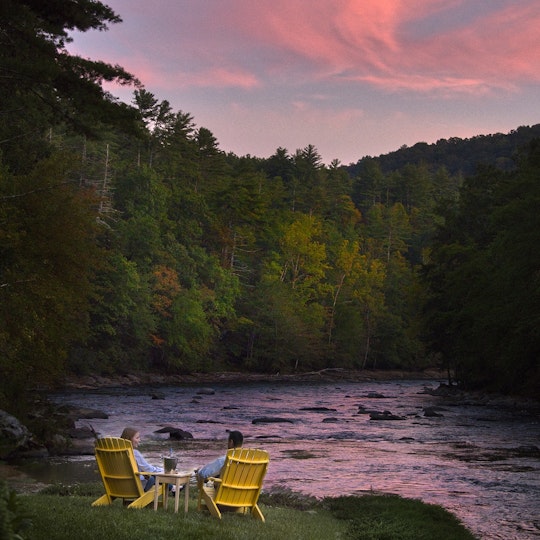
The Toccoa River runs right past our back door, and in the years we have hosted anglers at Big Kahuna River Lodge, one question comes up more than any other: should I hire a guide? For most visitors the honest answer is yes, at least for the first day. A good guide compresses years of local water knowledge into a single morning, and on a tailwater whose character shifts with every dam release, that knowledge is often the difference between a memorable day and a long, quiet one.
This is a practical look at guided fishing trips near Blue Ridge, GA: what your options are, what a day on the water actually looks like, the licenses Georgia requires, and the questions that separate an outstanding outfitter from a merely adequate one.
Why Book a Guided Fishing Trip Near Blue Ridge, GA?
The stretch of the Toccoa below Blue Ridge Dam is a tailwater, which means the river is fed from the cold depths of Lake Blue Ridge rather than from surface runoff. That single fact explains most of what makes this fishery special and most of what makes it tricky. Cold water releases keep trout comfortable through a Georgia summer when freestone creeks elsewhere in the state grow too warm. They also mean the river you waded at breakfast can be a foot higher and moving twice as fast by mid afternoon.
Reading those changes takes repetition. Guides run this water several days a week and know which seams hold fish at low flow, which banks come alive when generation starts, and when to simply move. Georgia holds roughly 4,000 miles of trout streams and the Wildlife Resources Division stocks close to a million rainbow and brown trout each year from March through mid September, but stocked fish distribute unevenly and wild browns behave differently again. If you would rather scout on your own first, our roundup of the best trout fishing spots on the Toccoa River is a reasonable starting point, though even experienced anglers tend to learn more in one guided day than in three solo ones.
Float Trip or Wade Trip? Choosing Your Day on the Toccoa
Nearly every outfitter working the area offers both formats, and picking correctly matters more than picking the fanciest boat.
A float trip puts you in a drift boat or raft and covers several miles of river, much of it bordered by private land you could not otherwise reach. You fish from a seat, the guide handles the oars and the positioning, and you get shots at water that never sees a wading angler. Floats suit mixed ability groups well, because a beginner and a veteran can fish the same boat productively. They also work when flows are up and wading would be unpleasant or unsafe.
A wade trip is slower and more intimate. You cover less river but you learn it properly: where to stand, how to approach a run without pushing fish out of it, how to mend line so a drift looks natural. If your real goal is to become a better angler rather than simply to catch fish today, wading is the better investment. Guided wade trips often work the water near Mineral Bluff and Morganton, while float sections commonly run downstream toward McCaysville, where the Toccoa continues north toward the Tennessee line and changes its name to the Ocoee.
If you are completely new to the long rod, read our beginner guide to fly fishing the Toccoa River before your trip, and skim which hatches to match on the Toccoa so the fly names your guide uses are not a foreign language.
Do I Need a License If I Hire a Guide in Georgia?
Yes, and this trips up more visitors than anything else. Hiring a guide does not cover you. In Georgia, every angler aged 16 or older needs both a fishing license and a trout license, and both are the individual angler responsibility, not the outfitter. Guides will remind you, but they cannot sell you one from the boat.
Both are available online in a few minutes through the state licensing portal at Go Outdoors Georgia, and the Georgia Wildlife Resources Division trout fishing page is the authoritative source for current regulations, stocking information and special stream rules. We have also written a plain English walkthrough of how to get your Georgia trout license and trout stamp if you would rather have it laid out step by step. Buy them before you arrive in Blue Ridge. Cell service in the river corridor is inconsistent, and nobody wants to spend the first hour of a paid guide day hunting for a signal.
What a Guided Trip Includes, and What to Ask Before You Book
Most outfitters running guided fishing trips near Blue Ridge, GA provide rods, reels, flies, terminal tackle, waders and boots if you need them, and instruction throughout. Full day trips frequently include lunch on the water. What varies, and what you should confirm in writing, is the rest.
Ask how many anglers share a guide. Two is standard in a drift boat and gives each person real attention; three is common but means more waiting. Ask whether the price is per boat or per person, because the difference is substantial. Ask what happens if flows spike or the weather turns, since a good outfitter has a rain and release policy and will move you rather than cancel outright. Ask whether the trip is catch and release, and confirm that expectation matches yours.
It is also worth asking which water the guide plans to fish. North Georgia has streams under special regulation, and a guide who works them regularly is worth having. Noontootla Creek trophy trout water on the Blue Ridge Wildlife Management Area, for example, is artificial lures only, and every trout under sixteen inches must be released immediately. Rules like that reward local expertise and punish guesswork.
When to Book: Seasons, Stocking, and Water Releases
Georgia designated trout waters are now open year round, which removes the old scramble around a fixed opening day, but the seasons still fish very differently.
Spring brings heavy stocking and eager fish, and it is the friendliest window for a first timer. Summer is when the tailwater earns its reputation, because cold releases hold temperatures down while much of the Southeast bakes, and early morning and evening floats can be superb. Autumn is the connoisseur choice, with brown trout growing aggressive ahead of the spawn and the surrounding ridges turning over, though this is also peak visitor season across Fannin County. Winter is quiet, occasionally excellent, and the easiest time to get the guide you actually want on short notice; our notes on winter fishing on the Toccoa River cover what to expect.
Two booking realities are worth internalising. First, reputable guides fill their October and holiday weekend calendars months ahead, so treat those dates as urgent. Second, dam generation is scheduled by the Tennessee Valley Authority and published in advance, and any guide worth booking will already be building your day around the release window rather than being surprised by it. When you call, ask what the flows are forecast to do. The quality of that answer tells you a great deal.
Making It an Easy Morning
The logistical advantage of staying on the river is simply that everything gets shorter. Guides can meet you at the property instead of at a distant put in, gear can stay rigged overnight, and a dawn start does not require a pre dawn drive from Blairsville or an hour on winding roads from Ellijay. When the evening hatch comes off, you walk down to the water rather than driving back to it.
That is the reason many of our guests build a trip around two guided days with an unguided day between them, using what they learned on day one to fish the private water in front of the lodge on day two. If you are weighing up guided fishing trips near Blue Ridge, GA for a group, this rhythm tends to keep everyone happy, including the people who came for the porch rather than the trout.
Ready to build your trip around the river instead of around the drive? Check availability at Big Kahuna River Lodge and let us point you toward the guides we trust on this stretch of the Toccoa. Bring the rod. We will handle the rest.